Sizing a Mast — Payload, Height and Wind Are One Problem
Why a mast rated for 192 kg will not carry 192 kg at full extension, and how to read a configuration table so the number you quote is the number you get.
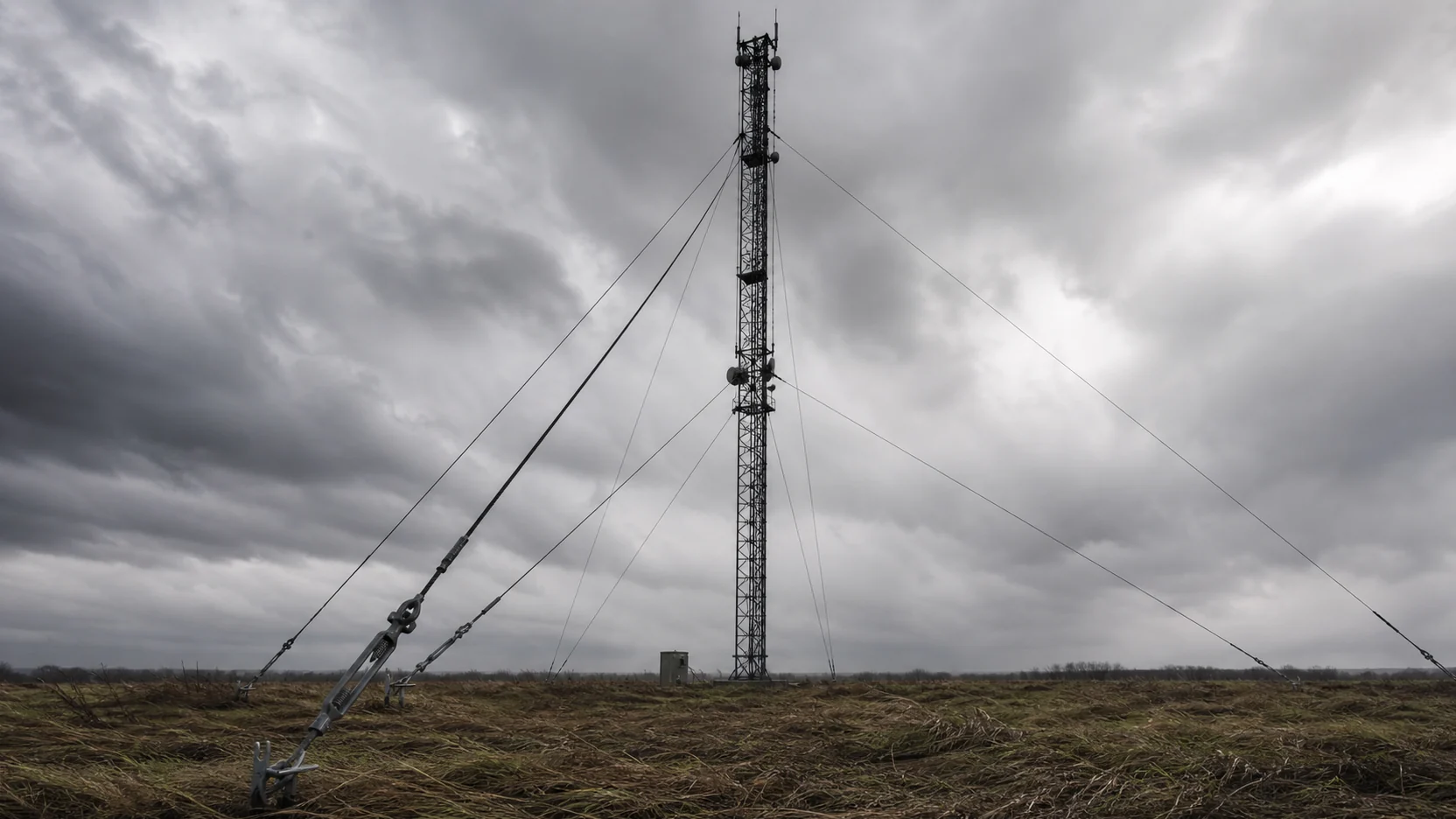
The most common specification error we see is a mast selected on its headline payload figure. The headline figure is real, but it belongs to a configuration, and the configuration that carries it is rarely the one the mission needs.
Three numbers that move together
Extended height. More height means a longer moment arm. The same payload at 10 m applies far more bending moment at the base than it does at 3 m.
Payload. The rated figure falls as the mast extends. This is not a marketing caveat; it is the structure. Section overlap decreases, the moment arm grows, and the drive has more mass to lift and hold.
Wind area. A payload’s projected area is often the governing load, not its mass. A flat panel antenna weighing 15 kg can present more wind load at 10 m than a 40 kg gimbal at 4 m. Masts in the range are rated at 120 km/h and and so are the tripods; that rating assumes a stated area.
Any two of these can be satisfied easily. All three together is the engineering problem, and it is the reason the product pages publish a configuration table rather than a single number.
The system’s wind rating is the lowest one in the stack
A mast rated for a given wind speed does not make the system rated for it. The sensor has its own limit, the positioner has one, the mounting adapter has one, and the radome or sunshield that somebody added late has one. The figure that governs is the smallest of them, and it is not usually the mast. This is worth checking before the mast is chosen, not after, because the cheapest way to fix a system-level wind rating is almost always to change the thing on top rather than the thing underneath.
Two related points that a static rating does not cover:
Projected area changes as the head slews. A pan-tilt assembly presents one area facing forward and another facing across. The area that matters is the worst orientation the system can reach under wind, not the orientation it happens to park in.
Ice is a load case, not a weather inconvenience. A few millimetres of radial ice on the mast body, the payload and the cabling adds mass at the top and, more importantly, multiplies projected area on every surface at once. In a climate that ices, the governing survival case is often ice plus a moderate wind rather than a storm on a clean structure.
How to read the configuration table
Every published configuration is a row that has been engineered and given a part number. It is not a slot machine: you cannot combine the height from one row with the payload from another and expect a valid system.
The method is:
- Fix the height you actually need, not the maximum available. Height you do not use costs weight, folded length and money.
- Add up the real payload: sensor, positioner, cabling, any radome or heater, and the mounting adapter. Adapters are forgotten more often than anything else.
- Estimate the projected area of the whole assembly at its worst orientation.
- Find the row that satisfies all three. That row’s code is the part number.
On a vehicle, the vehicle is part of the mast
A mast on a fixed foundation is a cantilever built into ground. A mast on a vehicle is a cantilever standing on springs, and the springs are usually the softer element. Suspension compliance sits in series with the mast’s own stiffness, which means a system characterised on a concrete pad and the same system on a 4×4 are not the same structure and will not hold the same pointing.
The practical consequence is that stabilisers, jacks or a locked suspension are not deployment convenience items. They are what puts the mast’s own stiffness back in charge. A mast raised without them will meet its deflection figure and still miss its pointing figure, and the report will blame the mast.
Drive type is a mission decision, not a preference
Manual masts remove a failure mode. Nothing to power, nothing to fail electrically. They suit teams that deploy and recover in the same shift, and they are lighter for the same height.
Electromechanical masts raise heavier payloads without a crew on the mast, and can be operated from inside a shelter or vehicle. Where a mast must stay extended for days, self-locking and independent braking matter more than raise speed: they decide what happens during a power interruption.
Two mechanisms in the range deserve a note. The spindle drive raises all sections synchronously and holds stability at extension where a simple telescopic section would deflect. The screw-driven compact units are the ones that lift several times their own mass in a matter of seconds, which is what makes them viable on a small vehicle.
One question to ask about any drive: how fast does it come down, and does anyone have to touch the mast to bring it down? A vehicle that has to move is limited by its recovery time, not its deployment time, and a lock that has to be released by hand at height is the item that sets it.
Section count is a trade, not a feature
More sections fold shorter, which is what fits a mast on a vehicle. More sections also mean more joints, and each joint contributes deflection at full extension. If pointing stability at height matters — and for an imaging payload it always does — fewer, longer sections are usually the better answer.
The clearance nobody checks
Folded length gets checked against the door, the roof and the transport envelope. What gets checked less often is the volume the mast sweeps while it is rising, and what is directly above the parked position. Overhead cables, tree limbs, the edge of a hangar door and a neighbouring structure are all found the same way, and it is not a cheap way to find them. Where a site is fixed, the raise path is worth marking on the layout drawing alongside the footprint.
What to send us
Height, payload mass, projected area, whether the mast stays up unattended, and the transport constraint (folded length, roof height, door width). With those five, we can point at a specific row in a specific table rather than a family. If the site ices or the platform is wheeled and cannot deploy stabilisers, say so in the same message; both change the answer.