Application Notes
Selection and integration, worked from the requirement.
A 2.45-Metre Tripod Needs 16 Metres of Ground
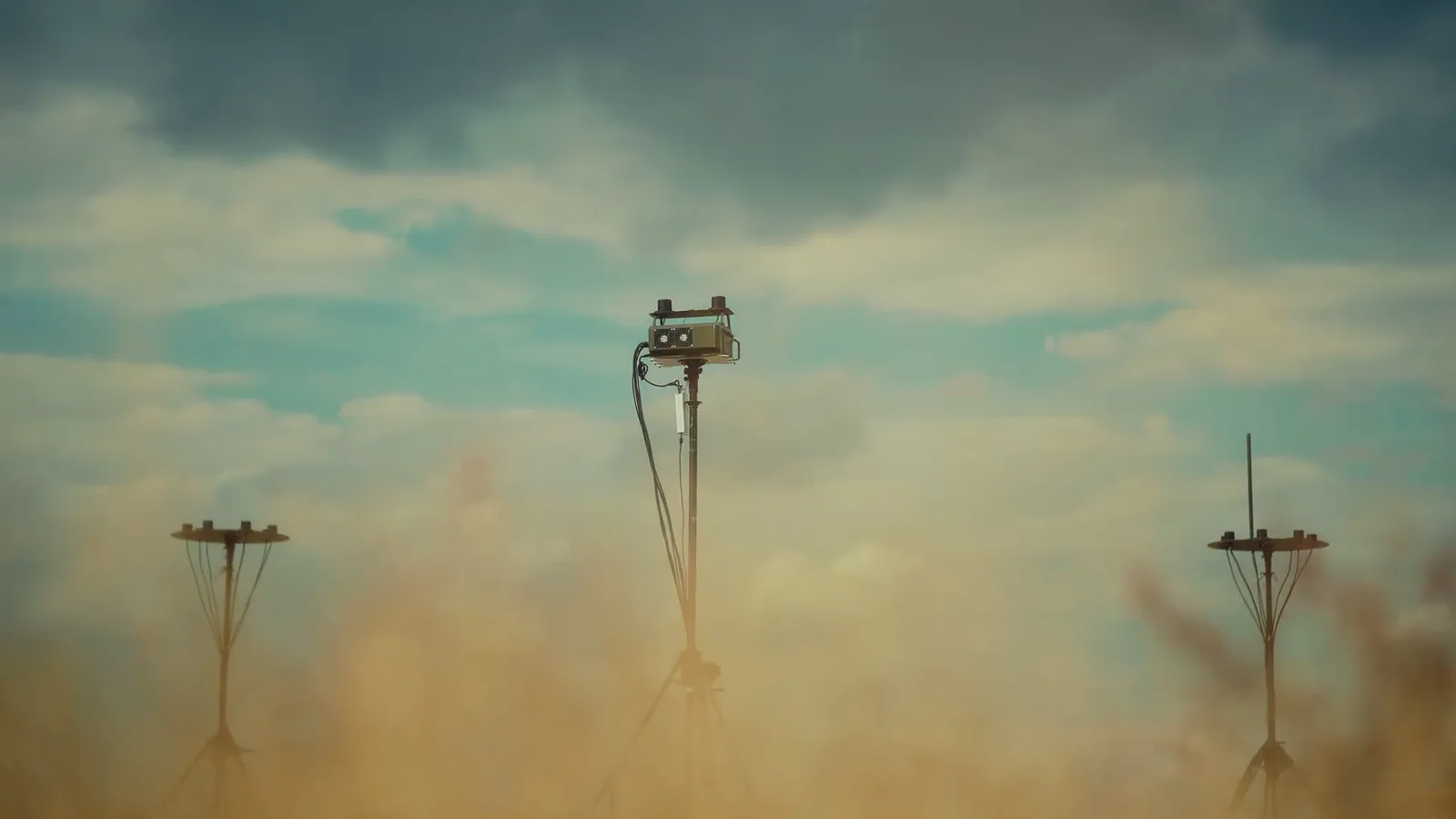
A guyed mast claims far more ground than its tripod covers, and the stake circle — not the base — decides where masts can stand. Work the anchored footprint from the published heights, then plan a multi-mast site around the circles rather than the poles.
The Newest Angle Can Belong to the Wrong Image
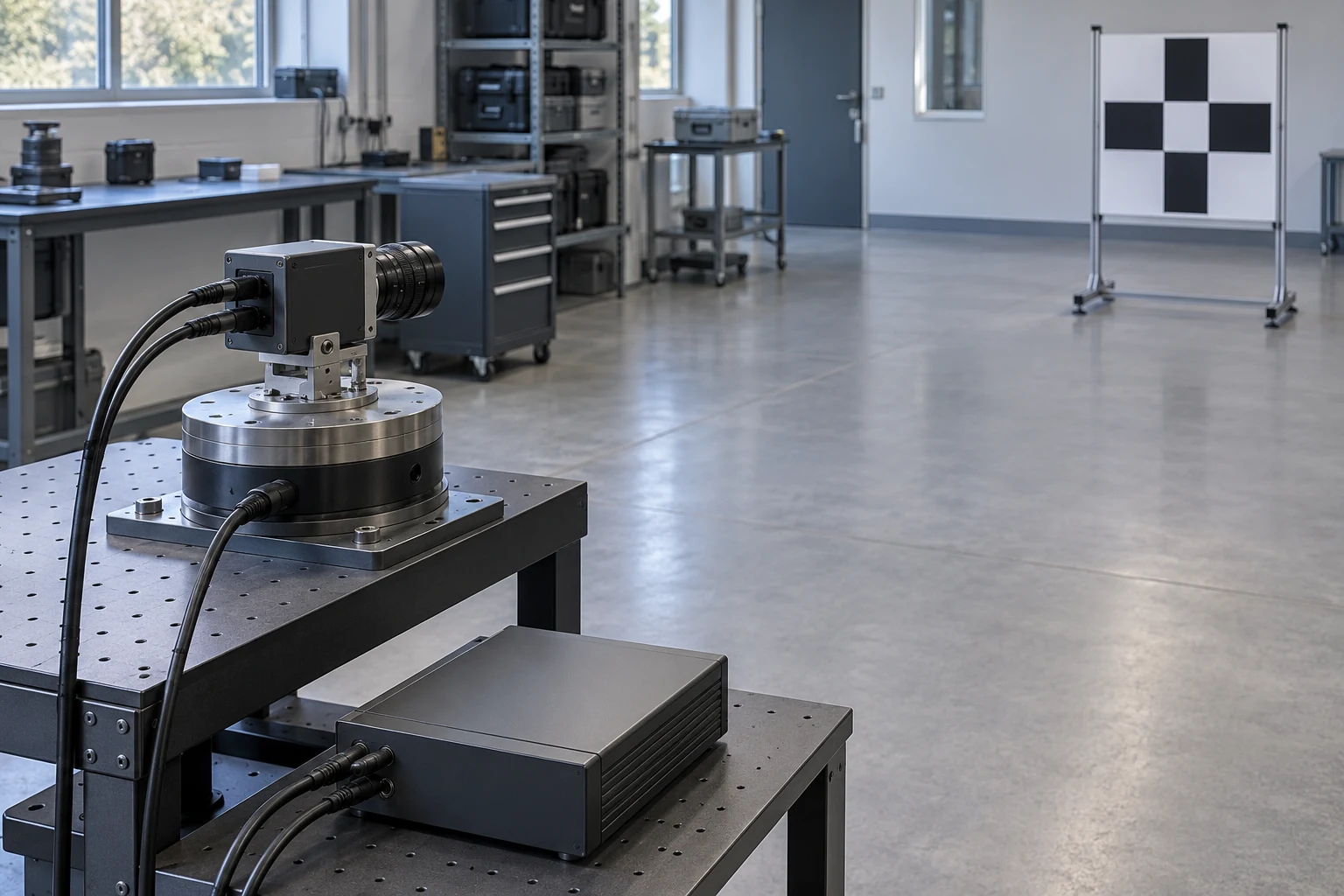
An angle can arrive recently yet describe a different moment from the saved image. Commission the full association: define timestamp events, compare clocks, interpolate across angle wrap, and verify the result with an independent timing witness.
Why 1,500 W of Cooling Does Not Mean 1,500 W at the Plug
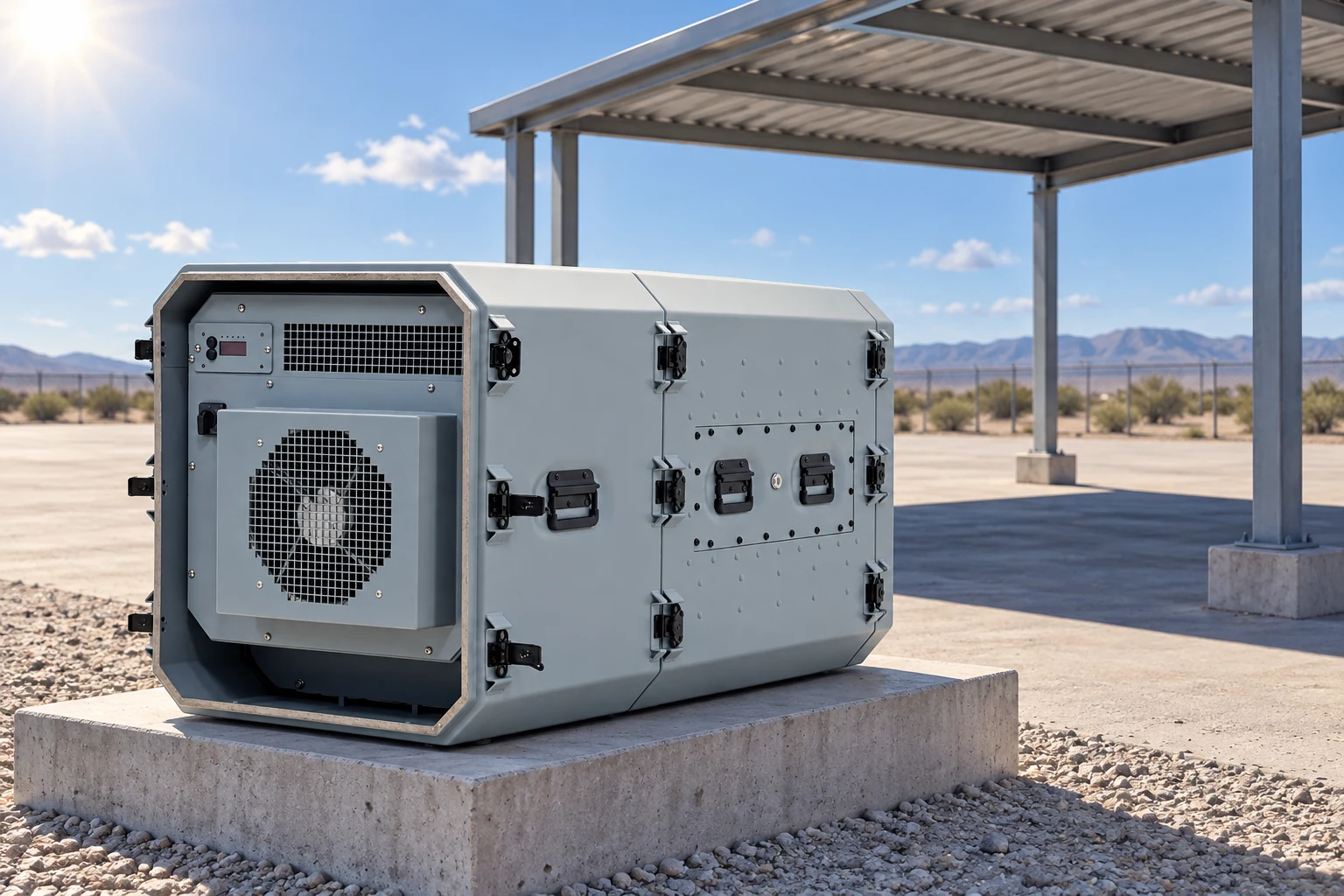
A rack has three different watt figures: heat inside, electrical demand and heat released outside. A checked example shows how to count each one, avoid hidden losses and verify cooling where the equipment takes in air.
A Heavy Tripod Can Still Move
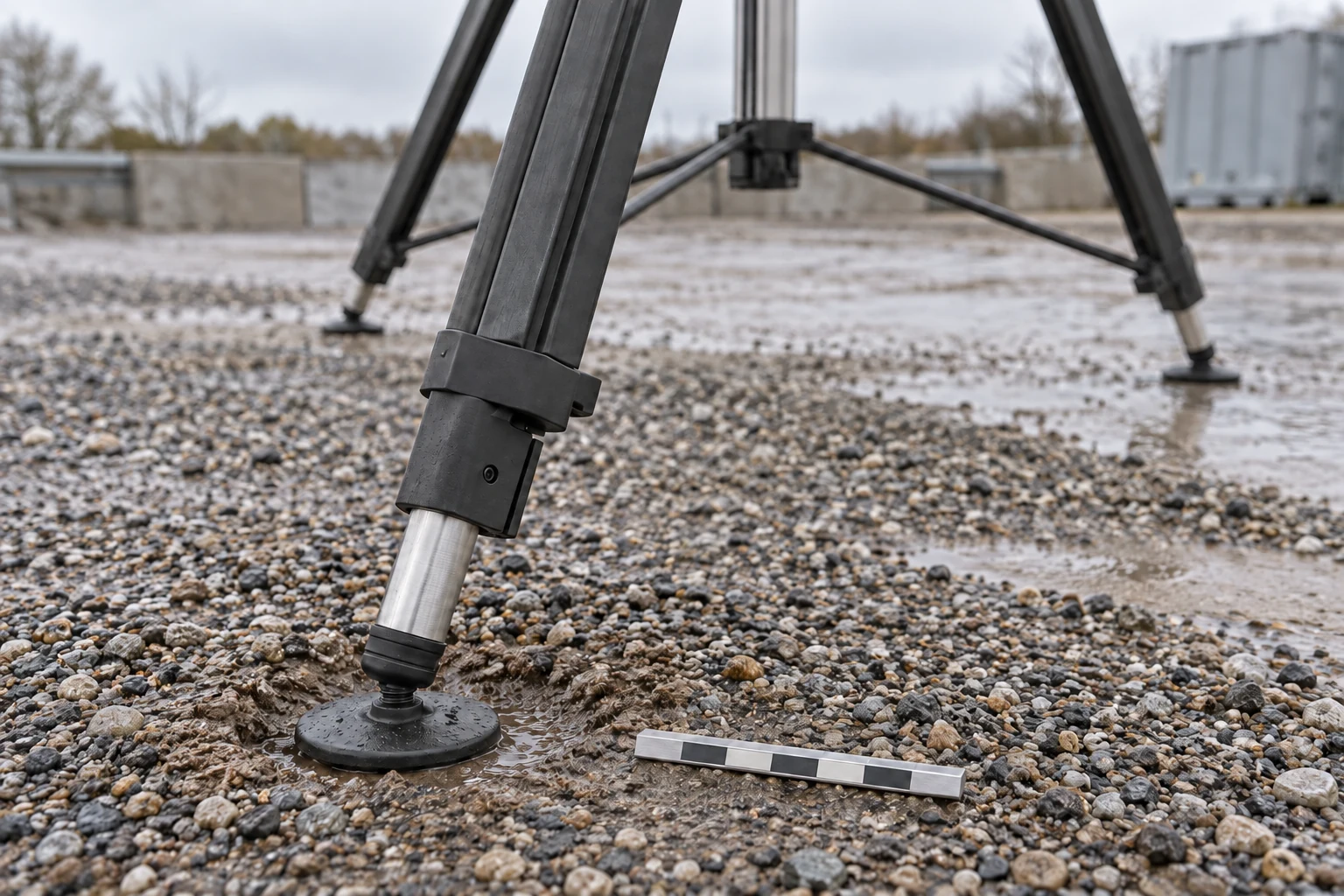
Payload mass does not reveal how a tripod shares load with the ground. Trace settlement, changing foot reactions and cable pull, then record a repeatable mechanical check that separates a sound installation from a momentarily steady one.
The Battery Reads 24 V. Why Does the Camera Still Restart?
A healthy battery reading can hide a brief voltage dip at the equipment. Follow the outgoing and return paths, work through a short power event, and learn how two simultaneous measurements separate the likely causes.
Same Weight, Three Times the Wind Load
Two payloads can weigh the same yet place very different demands on a mast. Learn how exposed shape, wind speed and mounting height combine, then read a real configuration table without mixing its limits.
Why the Strongest Infrared Band May Not Give the Clearest Image
A warm surface emits much more radiation in one infrared band than another. Yet that alone cannot choose a camera. Use a calculated spectrum, a lens example and a fair comparison to find the channel your task needs.