The Requirement
Unmanned ground vehicles set hard limits on mass, nested length and power.
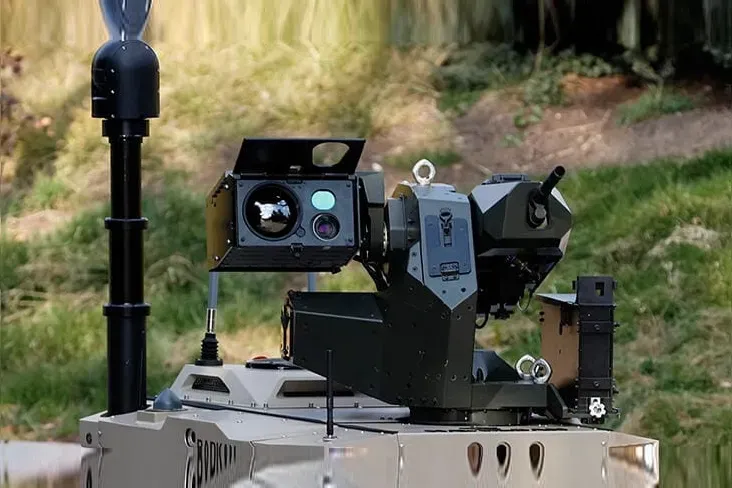
The dual and triple channel gimbals in this range weigh 4.4 to 8 kg and draw a maximum of 150 W, and the ultra compact mast nests to 535 mm at 4 kg with the motor, control cards and payload cabling already inside. Uncooled LWIR is normally the right choice here: no cooldown time, high MTBF and lower cost of ownership over long unattended deployments. Plug-and-play mast interfaces remove the need for a separate flange support on the vehicle roof.
Step 01
Sensor
On an unmanned platform every gram and every watt is contested. The sensor is chosen by what the operator must see from a remote station, then trimmed to the mass and power the vehicle can actually give it.
Step 02
Positioner
Remote operation makes the control interface as important as the mechanism. Ethernet control and compressed video over the same link reduce the cable count crossing the vehicle, which is usually the binding constraint on a small platform.
Step 03
Elevation
A compact mast lets a low vehicle see over cover without exposing itself. Retracted height and mass govern: the mast is carried on every mission and raised on few.
What governs the choice
- Mass budget
- The lightest mast in the range weighs 3.5 kg at 1.5 m extended, which is what makes it viable on a small platform.
- Power draw
- A 12 / 24 V DC input suits vehicle supplies directly and avoids a converter stage.
- Control interface
- Ethernet with h.264 / h.265 compression keeps the video and the command on one link.
- Folded length
- Fold ratios of 3.0 to 5.0 decide whether the mast fits the vehicle at all.
Where the site sets the limit
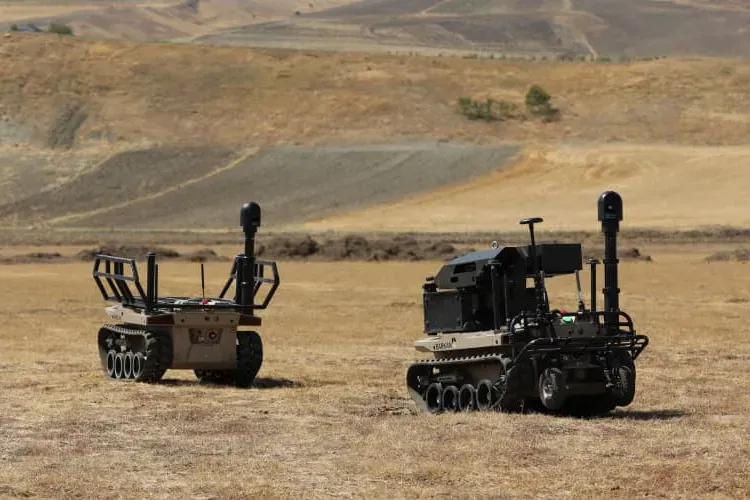
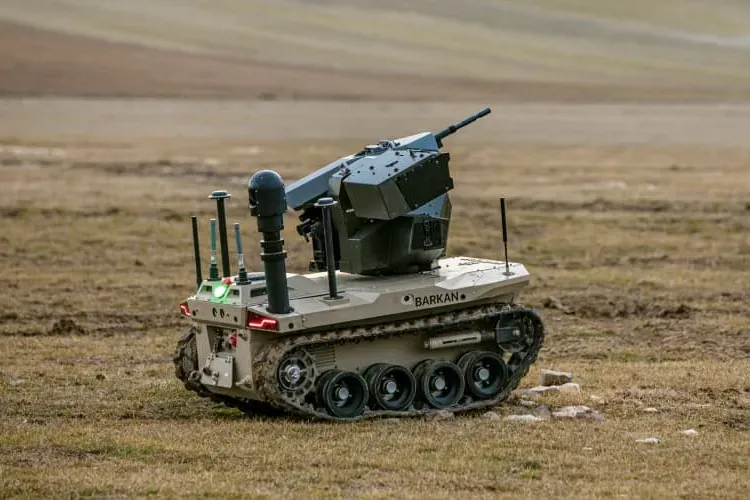
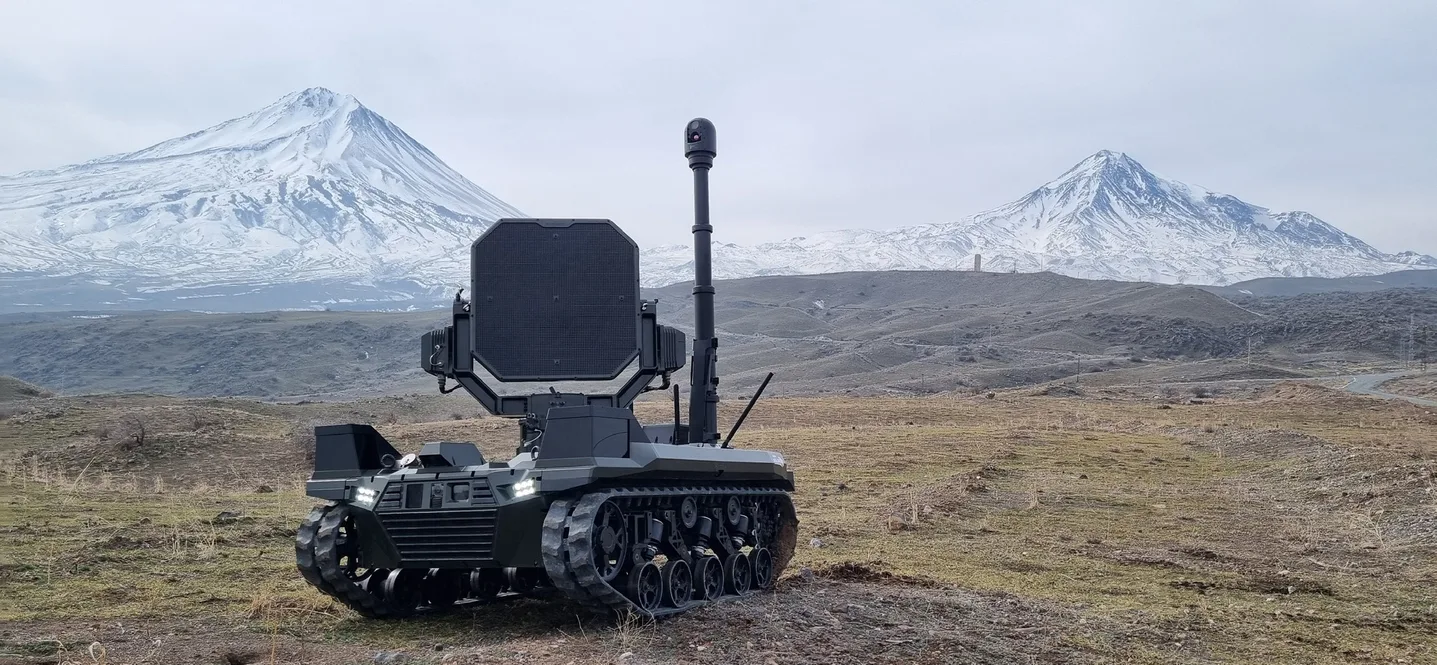
- Systems from this range are in service on unmanned ground platforms: a stabilised thermal and day gimbal on the HAVELSAN unmanned ground vehicle, and a compact electromechanical mast on the Ertuğrul explosive ordnance disposal robot.
- Unmanned platforms see more shock and dust than a manned vehicle of the same class, because nobody moderates the driving.
- Anything that fails on a remote vehicle has to be recovered before it can be repaired. Self-locking and limit sensing reduce the number of ways it can stop halfway.
In Service
Qualified Products
All Products| Model | Product | Family |
|---|---|---|
| SEG10 | Dual Channel (EO-LWIR) Stabilised Gimbal System | Thermal Imagers |
| SEG12 | Multi Channel (EO-LWIR-LRF) Stabilised Gimbal System | Thermal Imagers |
| SEG14 | Multi Channel (EO-LWIR-LRF) Stabilised Gimbal System | Thermal Imagers |
| MES01 | Ultra Compact Electromechanical Mast System | Mast Systems |
| MES10 | Locked Electromechanical Mast System | Mast Systems |