Replacing the imported unit: a clean-sheet pan-tilt positioner
Clean-sheet design of a pan-tilt positioner to replace an imported unit for a prime contractor: 0.04° accuracy, 180°/s slew, 500 Nm torque.
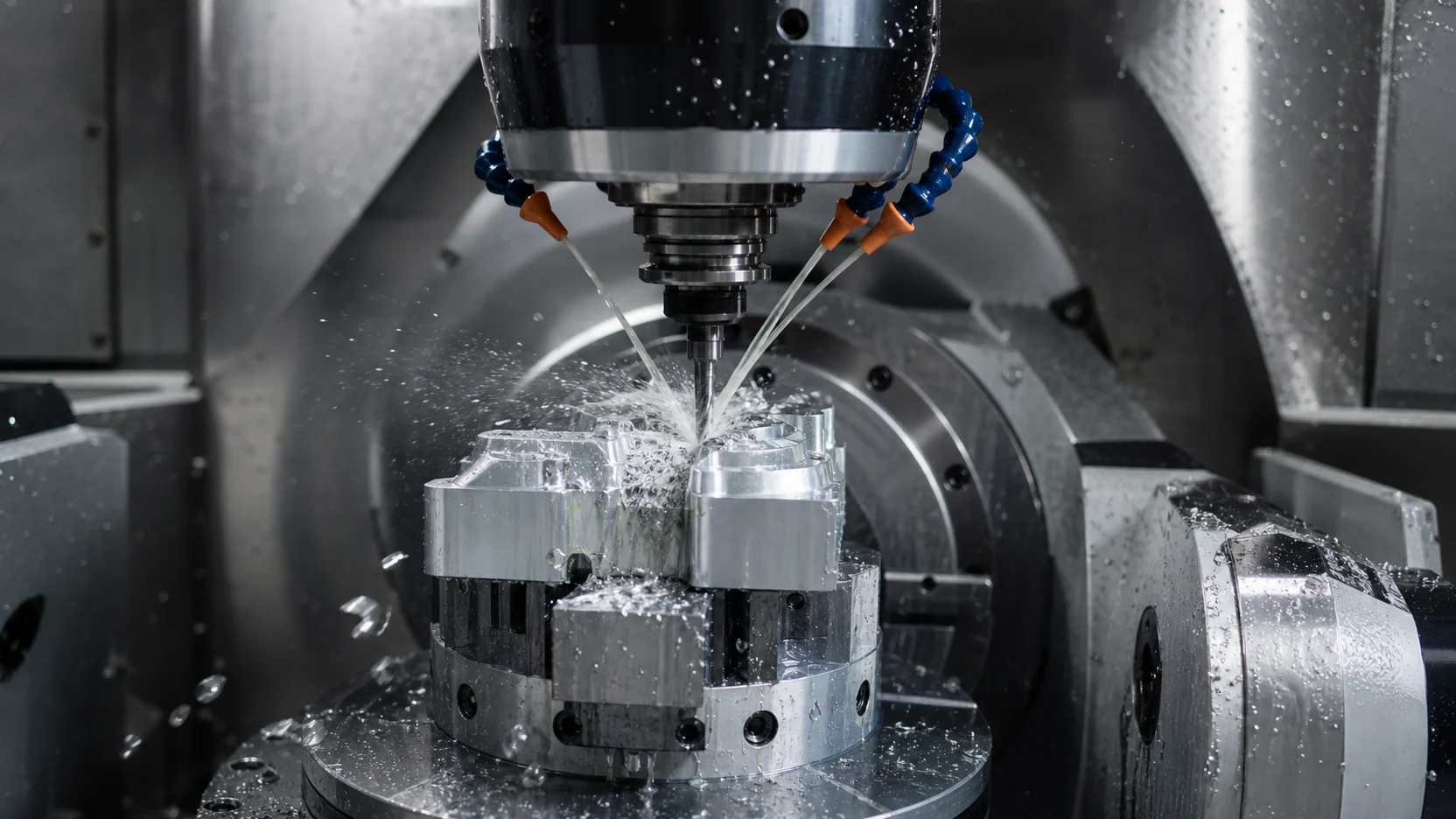
0.04° pointing · 180°/s slew · 500 Nm output torque
The requirement
A prime contractor needed to remove an imported positioner from a fielded system. The difficulty was not the performance figures. It was that “equivalent” had already been defined by hardware in service: the mounting interface, the envelope the unit had to occupy, the control interface and the harness were all fixed by decisions someone else had made years earlier. A clean-sheet design had to arrive at a housing shaped by another company’s solution.
The second difficulty was that the three headline figures had to hold at the same time. On the original datasheet they were three separate maxima. In service they are one operating point.
The configuration
An electromechanical two-axis positioner delivering 0.04° pointing, 180°/s slew and 500 Nm output torque, built to the existing mechanical and electrical interface.
Those three numbers are not independent, and that is the entire design. Output torque wants a large reduction ratio. Slew rate wants a small one. Fine pointing wants no lost motion anywhere between the motor and the load, which rules out the inexpensive ways of getting reduction. The gear stage is not a component selection in this design; it is the design, and the motor, the bearings and the thermal path follow from it.
What the engineering had to solve
Torque and speed are one budget. Meeting 500 Nm and 180°/s at the output is not a torque problem, it is a power and heat problem. Delivering torque while turning is a different machine from holding torque at rest, and a sealed housing has no easy way to move the losses out. The duty cycle the customer actually runs, rather than the peak, is what sized the thermal path.
Accuracy is bought with preload and paid for in friction. At 0.04°, any lost motion in the drive train appears directly as error on a reversal. A drive with backlash cannot be stabilised, only averaged. Removing it means preload, and preload means friction, and friction at low speed is stick-slip — the exact behaviour that ruins a slow scan. The two requirements pull in opposite directions through the same part, and the resolution is in how the reduction is built rather than in how the controller is tuned.
Arriving is not the same as settling. At 180°/s, reaching a commanded angle is easy and staying inside 0.04° of it is not. The deceleration ramp excites the structure and the payload, so the axis reaches the mark and then rings around it. Decelerate hard and the ring is long; decelerate gently and the slew is slow. What the mission cares about is time-to-settled, which is the sum of the two and is almost never the figure that gets specified. The profile was shaped against that sum rather than against slew rate.
The envelope was not negotiable. Motor, reduction, bearings, brake and electronics had to fit a volume laid out around a different architecture, with the load path running through mounting points chosen for someone else’s part. Where a fresh design would have moved a bearing, this one moved everything else.
The result
The unit meets 0.04° pointing, 180°/s slew and 500 Nm output torque, and it bolts to the interface that is already on the platform, so the change was a component swap rather than a system modification.
The consequence the customer noticed afterwards was a different one. Interface changes, control behaviour, scan patterns and soft limits stopped being requests routed through a foreign support queue and an export licence, and became engineering tasks with a schedule attached. The performance was the condition of entry. What changed the programme was that the design could be asked questions.