Owning the Subsystem — Why Localisation Changes What a Buyer Can Ask For
Localisation is usually discussed as supply-chain risk. The more consequential effect is technical - what a buyer is allowed to change, and how quickly, when the supplier owns the design rather than resells it.
Import substitution is normally argued on grounds of supply security and currency exposure. Those arguments are sound, and they are also the least interesting part of the case. The larger difference is what a buyer can ask for after the order is placed.
The integrator’s ceiling
A system integrator who buys a gimbal, a positioner and a mast from three different vendors owns the interfaces between them and nothing else. That integrator can specify, mount and cable. What that integrator cannot do is change a control loop parameter, add a line to a slip ring, alter a mounting pattern, or shift an optical field of view — because each of those lives inside a supplier’s design, behind a support queue and an export licence.
The result is that requirements get negotiated downward. Not because the requirement was wrong, but because changing the hardware is not on the table.
The problem is not only changing it. It is keeping it.
The argument above is about the first years of a programme. The harder version arrives later, and it is the one that decides the cost of a fleet.
A platform stays in service for decades. The electronics inside it do not. Somewhere in an imported subsystem there is a component that goes end-of-life on a schedule set by a market that has never heard of your programme, and when it does, the subsystem goes with it. An integrator who does not own the design cannot re-spin a board around an available part, cannot re-qualify a substitute, and cannot even reliably find out that the change is coming. What that integrator can do is buy a lifetime stock at the supplier’s price, and hope the estimate of “lifetime” was right.
Owning the design does not make obsolescence go away. Components still go end-of-life, and the analysis chain and the qualification evidence still have to be re-opened when a change is significant. What it changes is who decides the schedule. An obsolescence event becomes an engineering task with a cost and a date, rather than a letter announcing one.
What changes when the design is owned
When mechanical design, electronics, embedded software and manufacturing are in the same organisation, a change request stops being a procurement event and becomes an engineering task. Concretely, these become answerable:
Interface changes. A different connector, a different pinout, a different protocol on the control bus. These are configuration decisions, not vendor escalations.
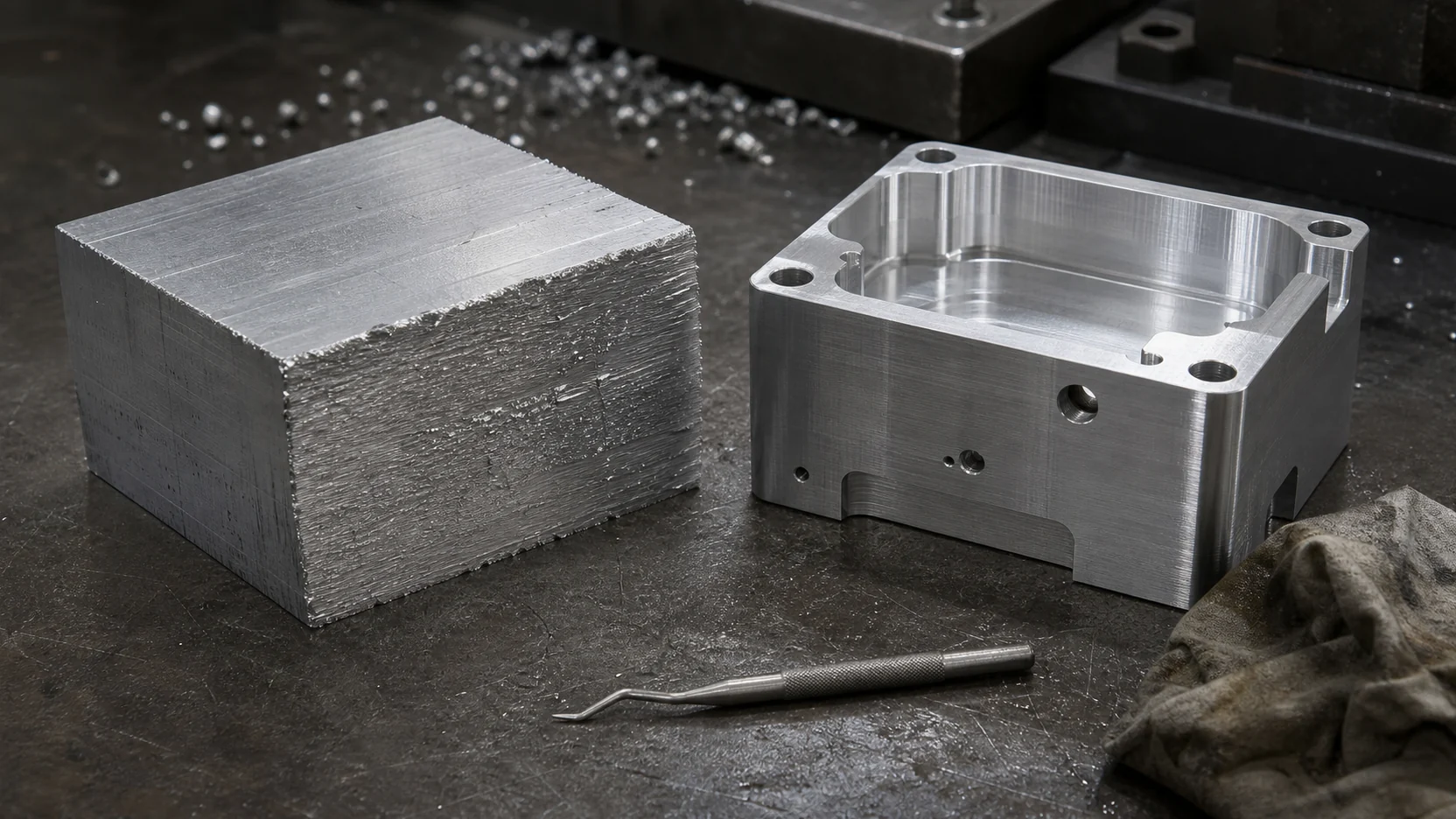
Mechanical adaptation. A payload interface, a bolt pattern, a different mast head. Parts are machined on five-axis CNC and measured on a CMM in the same building, which is what makes a four-week configured delivery credible rather than aspirational.
Control behaviour. Loop tuning for a specific platform, a scan pattern, a soft limit, a different acceleration profile. The control algorithm is verified on its target microprocessor against a simulated plant, so a change is tested before it reaches a customer’s vehicle.
Qualification to a customer’s profile. Not “we are 810G qualified” but “we will test to the vibration category your platform actually sees” — which requires owning the test article and, ideally, the chamber.
What it does not change
Localisation does not repeal physics or export control. A locally designed cooled MWIR imager still needs a cryocooler with a finite service life. A locally made system containing controlled technology is still subject to licensing, and end-use assessment still applies. Claims that localisation removes these constraints should be treated with suspicion.
Nor does owning a design make every change cheap. A change that touches the optical prescription or the primary structure re-opens the analysis chain and the qualification evidence with it. The distinction that matters is between changes that are possible and changes that are not on the table at all.
There is also a measurement problem worth naming. A local content ratio is an accounting figure, calculated by value, and a high one is entirely compatible with a critical dependency on one small imported item. A system can be overwhelmingly local by cost and still stop completely if a single sole-source component is withheld. The useful question is not what the percentage is. It is which items have exactly one source outside the country, and what the plan is for each of them.
How to test the claim
A supplier who claims to own a design should be able to demonstrate it without much notice:
- Ask to see a part being made, and ask which machine made it and how it was measured.
- Ask for an analysis result, not an analysis capability. A number with a load case and a safety factor attached.
- Ask what happens when you request a non-standard interface. The answer reveals whether the design is owned or resold.
- Ask which parts are bought in. Nobody makes detectors, bearings and connectors. A supplier who claims to make everything is overstating, and a supplier who names its bought-in items is easier to trust on the rest.
- Ask what happens when one of those bought-in parts goes end-of-life. The answer separates a design owner from an assembler, and it is the question a fleet operator will eventually need answered.
Ownership of a subsystem is not a marketing position. It is a set of things a buyer is permitted to ask for, and the honest way to evaluate it is to ask for one of them.